Our Contributions
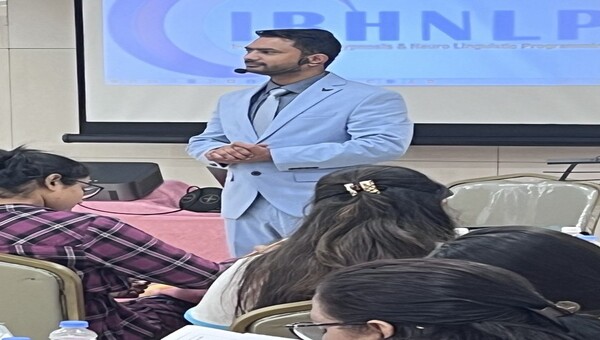
4th National Level Conference
One of the Mission of the Indian Board of Hypnosis and Neuro-Linguistic Programming (IBHNLP) is to initiate Scientific Research in the Field of Neuro-Linguistic Programming and help NLP to gain a well-deserved place in ‘Psychology Domain’. As a part of this mission, IBHNLP regularly presents its research papers in various National Level Conferences. Taking that mission forward, IBHNLP represented NLP Community in the 4th National Level Conference organised by Pune University. Following are the highlights of the research paper delivered by Mranal Gupta.
The theme of this conference was ‘Business Management, Information Technology & Innovation’ & the topic of a research paper presented was ‘The Innovator’s Mindset – How NLP can help you to transform yourself & your organization?’ Conference co-ordinator was Prof. Dr G.M. Ahire.

The Session began with a business survey published in Bloomberg News that says ‘8 out of 10 entrepreneurs who start businesses fail within the first 18 months. Therefore, innovator's mindset and ‘think differently’ attitude is needed for any business start-up.
Further, with the story of LEGO, business innovation and ‘think differently’ attitude was explained. The story goes like this: LEGO, the Danish toymaker that is often called as the most trusted company in the world in the field of toy-making. How would you react if customers secretly began hacking into your company’s computers? Call the police, right? But LEGO think tank asked itself, “why would customers do this?” When they talked to the hackers, they found that they were the LEGO fans who wanted to build their own creation. So LEGO developed software that would allow the fans to create new LEGO designs and encouraged them to share their toy designs with other customers. This is how LEGO converted ‘hackers’ into ‘design team’ and company profit and publicity skyrocketed within six months. This happened because LEGO thought differently.
Now the question is: ‘people those who innovate and think differently…
What do they exactly do differently?
What does it mean by thinking?
How does innovator’s brain function?
What exactly happens when these geniuses are in the state of ‘innovation’?
What do they experience inside their brain and body, when they ‘think differently’?
NLP answers these questions. NLP studies the structure of subjective experiences. Subjective experiences include what we usually call thought, mind or intelligence. In short, this refers to the totality of the activities happening in our nervous system. In simple language, NLP studies mental programming of the individual. It also means that if someone is innovative or is thinking differently then, with the help of NLP, we can understand how he/she is creating an innovative mindset in his/her brain. Now NLP assists us to know the mental programming of the person who is thinking differently. (Then some live experiments were conducted, which helped participants to understand the concepts.)
The Definition of NLP in relation to ‘innovation’:
N – How do innovators use their brain (VAK - Physiology)?
L – How do these geniuses use their language?
P – How do they create programmes that help them to invent?
Then the Most important NLP tool to model ‘innovative geniuses’ was discussed. Robert Dilts has developed a model ‘Neurological Levels’ from the work of Gregory Bateson. It is also useful for modelling ‘innovative geniuses’. This model was explained step by step. It has been widely adopted in NLP thinking. With this model, we can understand how geniuses who think differently are different from the rest of the crowd on the following levels:
-
Spiritual - Vision & Purpose
-
Identity - Mission
-
Beliefs - Values, Meta Programme
-
Capabilities - Skills, Talents, Strategies
-
Behaviour - Actions, Specific behaviour
-
Environment - Reactions, External Context
Finally, the NLP tools and techniques were combined with Bloom’s Taxonomy. Benjamin Bloom in1950s developed Bloom’s Taxonomy. This model helped students to express the qualitative difference among thinking patterns. Bloom’s Taxonomy provides a way to organise thinking skills into six levels, from the most basic to the most complex levels of thinking.


By combining NLP modelling tools with Bloom’s Taxonomy, we helped students to adopt innovator’s mindset and tried to explain to them how to think differently at a very early age. Conference ended in an overwhelming response from dignitaries, top management faculties from university, judges as well as management students.
(If you are a research-minded person, innovative and want to contribute in the field of NLP, IBHNLP can help you to put forward your ‘New Thinking’ about NLP and assist you to present your research papers in various universities. Click here to read our guidelines for submitting a research article.)
Click here to read our research articles on ‘Thin Slicing & NLP’.
Regular NLP Practitioner, NLP Coach, Hypnosis Practitioner & Life Coach Training Workshops are organised by the Indian Board of Hypnosis & Neuro-Linguistic Programming in Mumbai, Pune, Delhi, Bangalore and Ahmedabad.
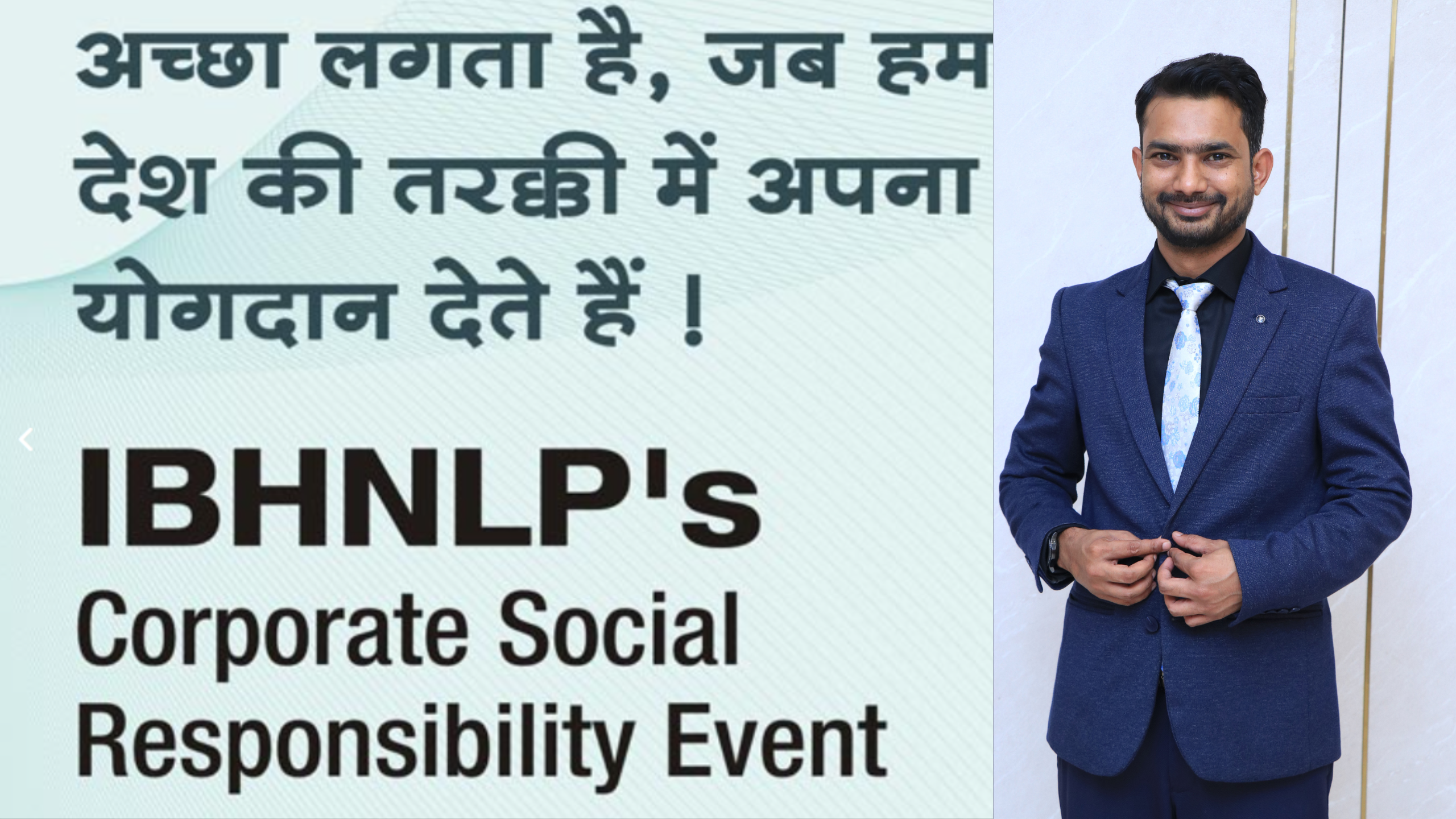
NLP based Leadership Development Program
Empowering the Pillars of Government in Rural Parts of India!
Under 'Corporate Social Responsibility' of The Indian Board of Hypnosis & Neuro-Linguistic Programming (IBHNLP), we recently conducted 'NLP based Leadership Development Programme' for Maharashtra State Government's Gramsevaks (State Government’s Representative in a Village) at Palaghar, Maharashtra on Non-Profit Basis.

Following is an outline of ‘NLP based Leadership Development Programme’
Our Motto is to create a strong Leadership in Rural Parts of India, where the Representatives of State Government in villages can lead their villages for the betterment & prosperity. Leaders are born, but Leadership can be developed.
What Did Participants Learn?
As a result of attending NLP based Leadership Development Programme, participants were enlightened on the following Leadership Abilities:
- Move out of comfort zones to work with colleagues and villagers, to solve problems & produce results
- Master various techniques to influence others
- Develop a Positive Attitude to address workplace challenges
- Effectively collaborate with various Government Departments and Government Officials to solve the problems of Citizens and accomplish high-quality work faster
- Develop a Personal Leadership Style & understand personal strengths and weaknesses.
Four Fundamental Leadership Principles taught in the Programme
1. Leadership is Not Position, it’s Behaviour:
Leaders take responsibilities; they make decisions and bring the desired change. Leaders help people around them to know and use their hidden potential. Leaders prove that they are leaders by their Behaviour, Actions and Attitudes. If anyone wants to be a leader, one should behave like a Leader.
2. Lead by Example:
Leaders influence their surrounding by setting up an example. Instead of telling others to do something, they show it by their own example. Remember, your team or people around you are observing and following you each and every moment. Practice what you preach. This is a simple truth that creates an Influence.
3. Leading Means Bringing Change and Making an Impact:
Think about the Best Leaders in history whether they are from politics or from the religious or social movement. What was the one thing they had in common? They all brought positive change and made an impact. Leadership is not merely talking impressively, but it’s about setting a course of action which produces positive change in society.
4. Unity is Strength, Division is Weakness:
‘Unity’ means helping and supporting each Team Member. To produce a result and bring the desired change, a team must have strong family-like bonding. Unity is the key to develop a Powerful Nation.
Five Phases of NLP based Leadership Development Programme
Phase 1. Leading Yourself / Leading Your Own Life
Systematic Development of Four Aspects of Personal Life
1. Body – Taking care of Health
2. Mind – Developing the Positive Mental Attitude
3. Heart – Loving Relationship with People Around
4. Spirit – Contribution in National Development
Phase 2. Leading a Village / Leading a Nation
Systematic Development of Three Aspects of Public Life
1. Leading Family
2. Leading Village
3. Leading Nation
Phase 3. Alignment for Better Result
A job or a task that has above-mentioned Four Qualities produces a Change.
1. You have required talent to finish a job
2. You are passionate about what you do
3. This world needs what you do
4. You are motivated by your conscience
And then magic happens.
You find your own calling and You become a change agent.
Phase 4. NLP Application
State Management – Controlling & Directing Emotions
Rapport Building – Getting connected with others Effortlessly
Milton Model – Making Message clear and Impressive
Well-Formed Outcome – Clarity is Power. Clearly deciding what kind of result is required to produce
Phase 5. Inculcating Leadership Skills
Self-Hypnosis – Communicating with sub-conscious mind and taking help of it to get mastery over Leadership Skills quickly
Post Training Support – A Complete Skill Development Plan for Next 30 Days

Enroll Today & Get a FREE
NLP Pre-Training Kit
Sometimes, taking the first step is the hardest. Trust your inner calling and move closer to personal excellence and professional success.
Speak With Our Experts
Get guidance on the right NLP & Hypnosis certification path for you.
Contact Us NowIBHNLP – The Indian Board of Hypnosis & Neuro-Linguistic Programming
IBHNLP is one of the leading NLP Training & Research Institutes in India. We provide the most comprehensive and affordable NLP Certification Courses in Mumbai, Pune, Delhi, Ahmedabad & Bangalore.
Attendees of the NLP Practitioner Certification Course also receive FREE Training & Certification in Direct Hypnosis & Life Coaching. Learn from India’s well-known NLP Master Trainer & Coach, Mrinal Gupta.
Register today to get complete details of our upcoming NLP Practitioner, NLP Coach, Hypnosis Practitioner & Life CoachTraining and Certification Programs conducted across major Indian cities.